Understanding How SARMs and Peptides Compare
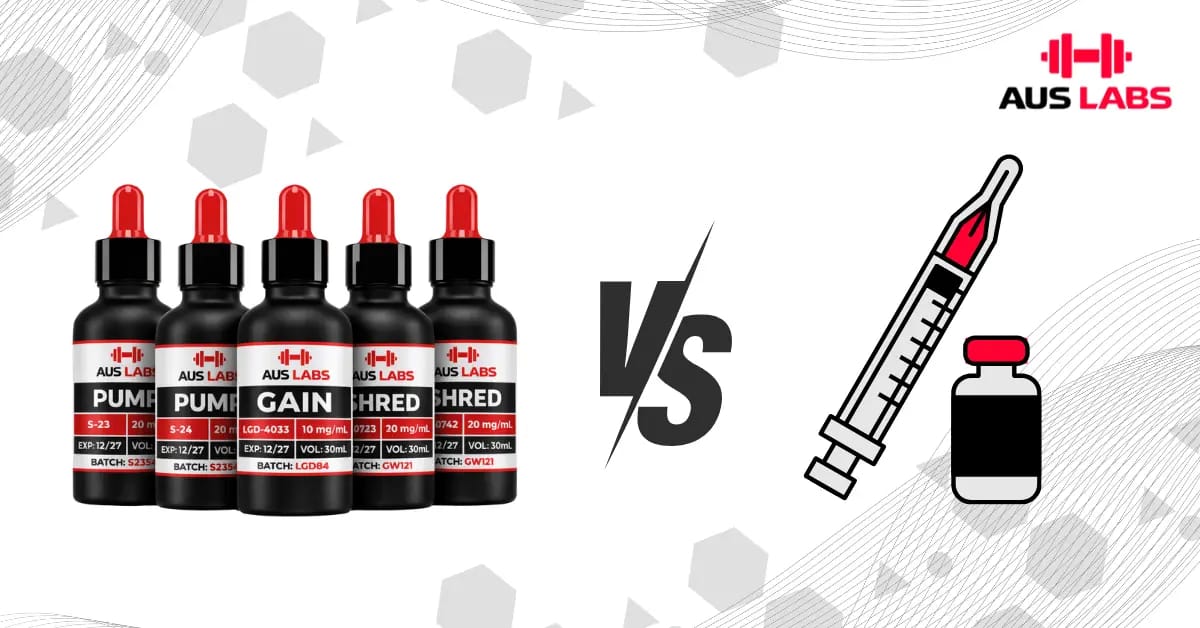
In fitness and performance discussions, SARMs and peptides are often mentioned in the same breath. Both are used with the goal of supporting muscle growth, recovery, and body composition-but they differ in what they are, how they work, and how they’re typically administered.
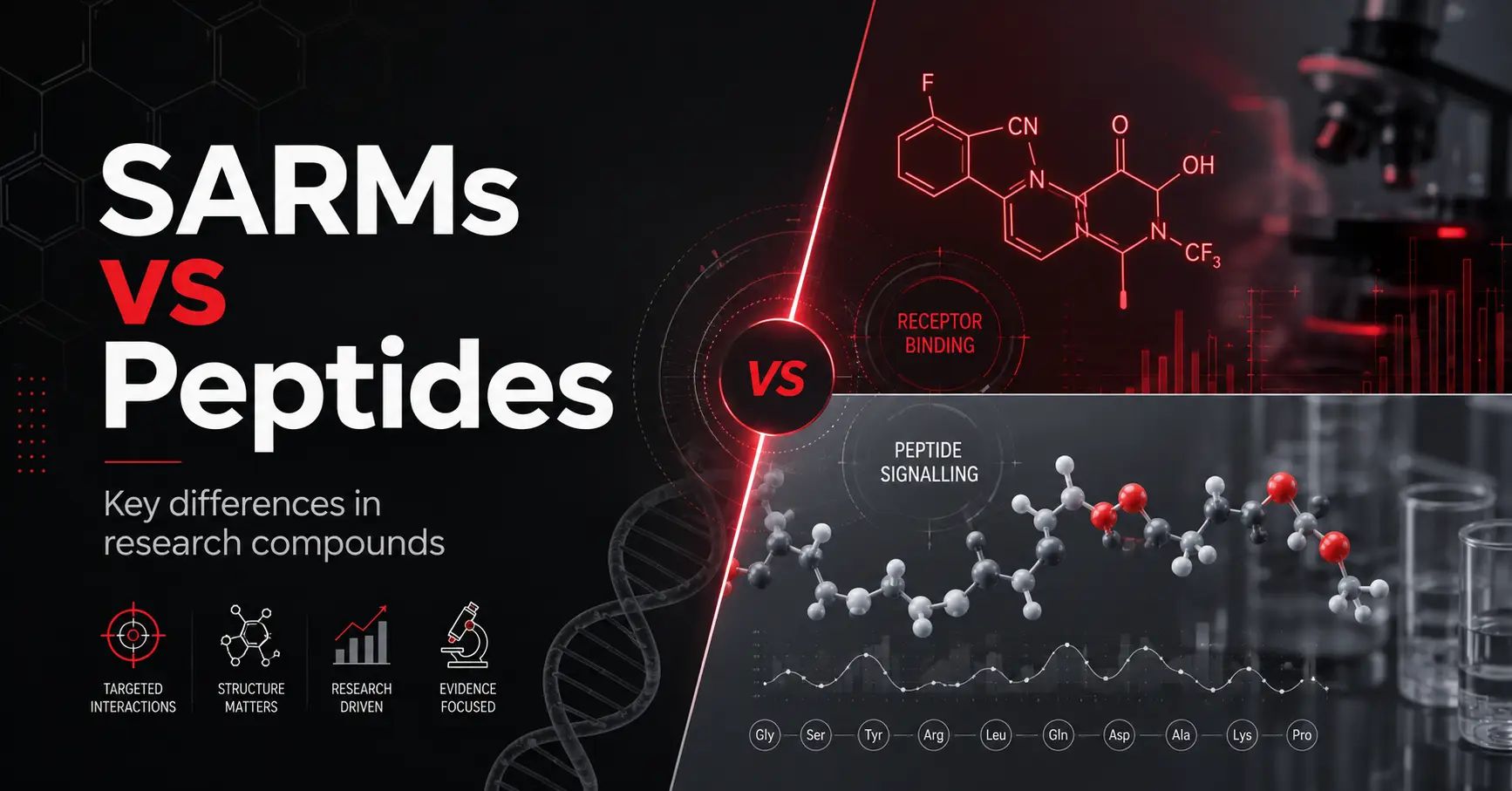
SARMs (Selective Androgen Receptor Modulators) are compounds designed to interact with androgen receptors in a more selective way than traditional anabolic steroids. In contrast, peptides are short chains of amino acids that can act as signalling molecules in the body and influence processes such as tissue repair and hormone-related pathways.
This medical comparison therefore focuses on mechanisms, expected effects, practical use considerations (such as oral vs injectable administration), and safety factors.
What Are SARMs?
SARMs (Selective Androgen Receptor Modulators) are compounds that bind to androgen receptors, aiming to produce anabolic (muscle-building) effects in a more targeted way. This receptor selectivity is a key reason SARMs are discussed as an alternative to anabolic steroids for physique and performance goals.[1]
Moreover, a major practical advantage-and a common reason people view SARMs as superior for convenience-is dosing: many SARMs are typically taken orally (for example, capsules or liquids). For people who prefer to avoid injections, oral administration can therefore be a meaningful differentiator.
What Are Peptides?
Peptides are short chains of amino acids (the building blocks of proteins). In the body, many peptides act as messengers that can influence appetite regulation, inflammation signalling, wound healing, and hormone-related pathways.
In fitness and wellness contexts, people often discuss peptides in relation to recovery, tissue repair, sleep quality, and support of training adaptation. However, peptide therapy is a broad term that can refer to clinically guided use of specific peptides for specific outcomes-and the evidence base varies significantly depending on the peptide.
From a practical standpoint, many peptides are administered by injection (for stability and absorption reasons), which can be a drawback for people who prefer an oral protocol. Ultimately, the specific peptide and formulation determine the administration method.
Mechanisms of Action: How SARMs and Peptides Work
SARMs primarily work through androgen receptor binding. By activating androgen receptors in certain tissues (especially muscle and bone), SARMs may support increases in lean mass and strength in some settings. Consequently, their appeal is tied to the concept of tissue selectivity-seeking anabolic effects with fewer off-target effects than older androgenic drugs.[1]
Peptides, by comparison, work through a range of signalling pathways. Different peptides act on different receptors and systems: some may influence growth hormone release, others may affect inflammatory pathways, and others may support tissue signalling involved in repair.
In simplified terms:
- SARMs: androgen-receptor modulators (often discussed for lean mass/strength and body composition).
- Peptides: signalling molecules with diverse targets (often discussed for recovery, repair, metabolic support, and wellness outcomes depending on the peptide).
Muscle Growth: SARMs vs Peptides
For muscle growth, SARMs are more directly associated with anabolic-style outcomes because of their androgen receptor activity. That’s why many people connect SARMs with changes in lean mass and strength when training and nutrition are aligned.[1]
In comparison, people more commonly discuss peptides as supportive tools that may improve the environment for adaptation-for example, recovery capacity, connective tissue tolerance, sleep, and signalling pathways related to repair. Some peptides are also discussed for body composition goals, although the degree and reliability of effect can vary widely by compound, protocol, and individual factors.
As a result, key practical comparisons people often make include:
- SARMs: commonly chosen for oral convenience and goals centred on lean mass/strength.
- Peptides: commonly chosen for recovery- and wellness-oriented goals, depending on the peptide and evidence.
- Both: outcomes depend heavily on compound selection, dosing, duration, training quality, nutrition, and sleep.
Peptide Therapy: Potential Benefits Beyond Muscle Growth
Depending on the peptide and clinical context, people discuss peptide-based interventions for outcomes beyond hypertrophy and strength. Some peptides have well-established medical use, while researchers are still investigating others or clinicians use them off-label in certain settings.
More specifically, common areas people discuss (which vary significantly by peptide and evidence) include:
- Recovery and repair support: signalling pathways involved in tissue recovery and training tolerance.
- Metabolic support: appetite and glucose-related pathways (peptide class dependent).
- Skin and connective tissue support: collagen-related pathways (evidence varies by intervention).
Therefore, peptide therapy is best approached as a compound-specific, goal-specific decision rather than a one-size-fits-all category.
Safety, Side Effects, and Quality Considerations
Any medical comparison of SARMs and peptides should include safety. The specific compound, dose, duration, individual health profile, and product quality can heavily influence outcomes and risk.
SARMs may be associated with risks such as changes in lipids, liver enzyme elevations (compound-dependent), and suppression of natural hormone production. Peptides can also carry risks, including injection-site reactions (when injected), unintended endocrine effects (peptide-dependent), and interactions with existing conditions or medications.[1][2]
Additionally, quality matters for both categories: mislabelling, inaccurate dosing, or contamination can substantially change both safety and outcomes. If you’re considering either approach, clinical guidance and appropriate monitoring are prudent.[3]
Choosing Between SARMs and Peptides: Which Is Right for You?
Your choice should reflect your primary goal (lean mass/strength vs recovery/wellness support), your preference for oral vs injectable administration, and your willingness to prioritise monitoring and safety.
- If oral convenience and lean-mass/strength focus are priorities: SARMs are often the first category people consider.
- If recovery, repair, or broader wellness pathways are priorities: peptides may be more relevant depending on the compound and clinical guidance.
Conclusion
Overall, SARMs and peptides differ in mechanism, administration, and typical use-cases. People often favour SARMs for oral convenience and muscle/strength-oriented goals, while they commonly discuss peptides for recovery and broader wellness applications depending on the peptide. Whichever direction you explore, focus on evidence, individualised goals, and appropriate medical oversight.
References
- Basaria S et al. The Safety, Pharmacokinetics, and Effects of LGD-4033, a Novel Nonsteroidal Oral Selective Androgen Receptor Modulator, in Healthy Young Men. The Journals of Gerontology: Series A. 2013.
- U.S. Food and Drug Administration. FDA Warns of Use of Selective Androgen Receptor Modulators (SARMs) Among Teens, Young Adults.
- Cohen PA et al. Chemical Composition and Labeling of Substances Marketed as Selective Androgen Receptor Modulators and Sold via the Internet. JAMA. 2017.
Frequently Asked Questions
Why are SARMs often considered superior for convenience?
Many SARMs are typically taken orally, while many peptides are commonly administered via injection. Therefore, for people who want to avoid injections, an oral protocol can be simpler and easier to adhere to.
Which is better for muscle growth: SARMs or peptides?
SARMs are more directly linked to lean-mass and strength-focused goals due to androgen receptor activity. In contrast, people more commonly use peptides to support recovery, repair, and training tolerance-though some peptides may influence body composition depending on the compound and protocol. The best choice depends on your primary goal and your risk tolerance.
Do peptides only matter for recovery?
No. While recovery and repair are common goals, peptides can be selected for a variety of targets-including appetite and metabolic pathways, connective tissue signalling, and other wellness-related outcomes-depending on the peptide and supporting evidence.
What are the most discussed risks with SARMs?
Commonly discussed concerns include lipid changes, potential liver-related effects (compound-dependent), and suppression of endogenous hormone production. However, risk profile can vary substantially by SARM, dosing, and duration.
What are the most discussed risks with peptides?
Risks depend on the peptide, but commonly discussed issues include injection-site irritation, dosing errors, and unintended hormonal effects. Therefore, as with any biologically active compound, individual health context matters.
Can SARMs and peptides both support health and fitness goals?
People discuss both for health and fitness outcomes, but the level of evidence and predictability varies widely by compound. Ultimately, for most people, the most reliable drivers remain training structure, nutrition, sleep, stress management, and medically appropriate supplementation.
Where To Buy SARMs & Peptides?

You can explore SARMs and peptides directly from AUS LABS with full purchase protection.
- Lab-Tested & Verified Purity
- 4500+ Verified Reviews
- 100% 90-Day Money-Back Guarantee
- Exclusive 30% Discount for New Customers
Have questions?
Our team of research experts is available to assist you via live chat or email.